
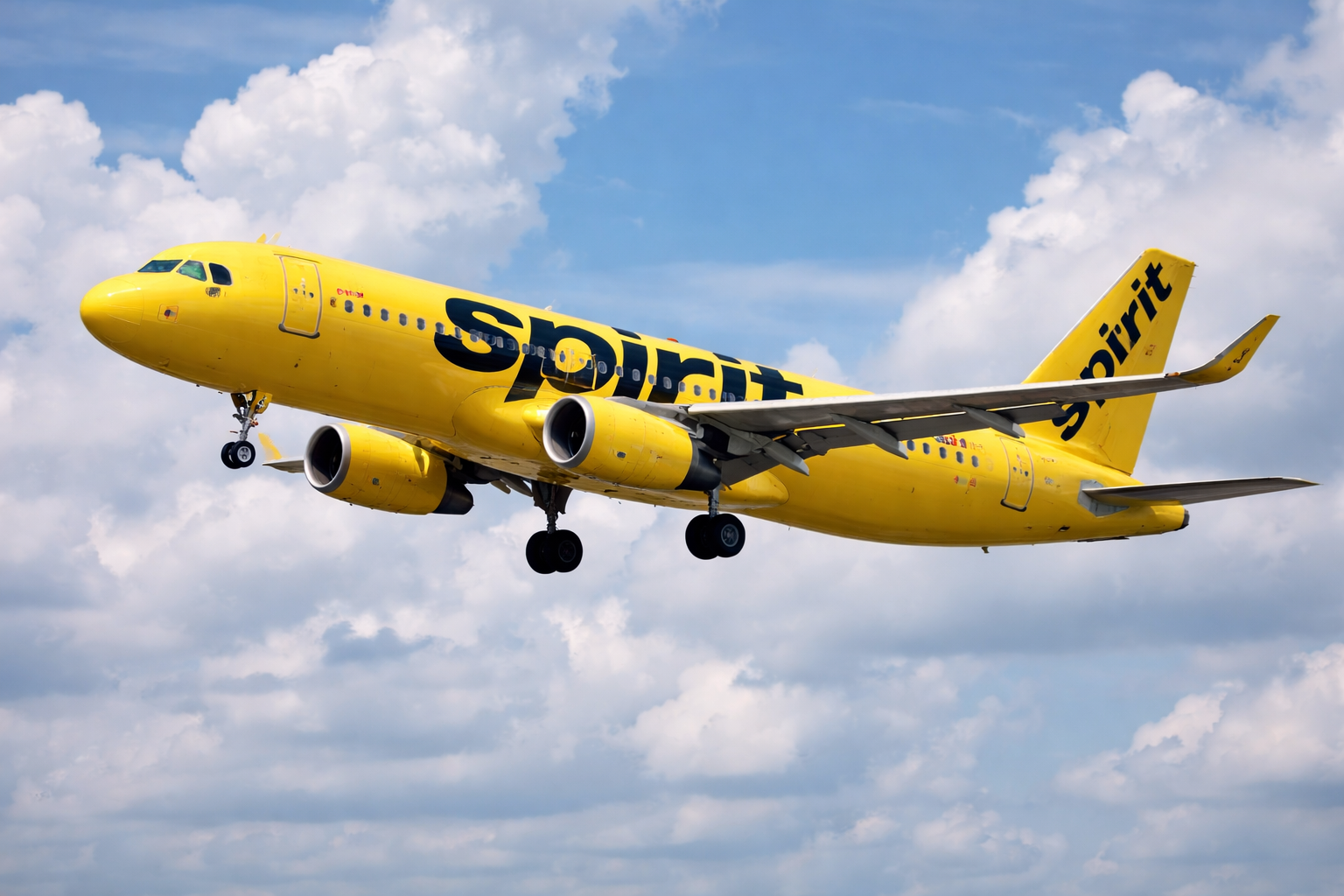
Spirit Airlines has reached an agreement with its lenders that would allow the carrier to emerge from bankruptcy by early summer as a smaller, leaner airline, marking its second attempt in less than a year to stabilise its finances.
The discount airline told a US bankruptcy judge on Tuesday that the deal would enable it to exit Chapter 11 proceedings with a stronger balance sheet and a significantly reduced fleet.
The restructuring plan, which still requires court approval, is expected to cut billions of dollars in debt and slash aircraft-related costs.
Magnitude of cost eliminations under new agreement
Spirit returned to bankruptcy court in August, less than a year after a previous Chapter 11 restructuring failed to resolve the financial pressures created by its no-frills business model and shifting demand in the domestic travel market.
Under the new agreement, Spirit expects to eliminate about $5.4 billion in debt and lease obligations.
At the time of its August filing, the airline carried roughly $7.4 billion in debt and lease costs.
Annual fleet costs would be reduced by more than 65% compared with pre-bankruptcy levels, according to court filings.
Company executives said the revised structure would allow Spirit to operate on a more sustainable footing, after years of losses exacerbated by rising costs, softer leisure demand and an oversupplied US airline market.
A leaner airline strategy
Spirit told the court it plans to emerge as a leaner airline focused on routes and travel periods with the strongest demand.
The carrier said it would continue to cut high-cost aircraft leases and improve utilisation of its remaining Airbus fleet.
The airline said the “new Spirit” would not be limited to ultra-budget travellers alone.
Instead, it aims to position itself as a low-cost, value-driven carrier offering both basic and premium options, while maintaining what it calls the lowest fares in the market.
That strategy includes flying aircraft more intensively on peak days while reducing off-peak operations, giving the airline greater flexibility to respond to seasonal shifts in demand.
Capacity cuts and fleet reductions
Spirit has already begun shrinking its operations.
Earlier this month, analysts at Deutsche Bank said the airline had cut its June-quarter capacity plan, with capacity expected to fall by nearly 30% year over year.
Further reductions could follow as Spirit continues to downsize its fleet.
The airline has been selling aircraft, rejecting leases and furloughing pilots and flight attendants as part of its cost-cutting push.
According to aviation data provider Cirium, Spirit has fewer than 15,300 flights scheduled in March, down 29% from a year earlier.
Flight schedules for April through June remain around 14,000 per month before rising above 15,000 in July and August.
Last fall, Spirit moved to reject leases on 87 aircraft, many of which were already grounded and in storage.
Chief financial officer Fred Cromer said at the time that excess aircraft were a major cash drain on the business, with lease rejections expected to save hundreds of millions of dollars.
Asset sales and future options
Spirit has also sought court approval to sell 20 Airbus planes at auction, with CSDS Asset Management lined up as the lead bidder and a price floor of $533.4 million.
If approved, competing bids would be due by early April, with an auction scheduled later that month.
At a Tuesday hearing, Spirit’s lawyer, Marshall Huebner of Davis Polk, said the restructuring could still leave room for potential future industry transactions once the airline stabilises.
For now, Spirit’s focus remains on exiting bankruptcy and reshaping its business around lower costs, fewer planes and a more disciplined network — a reset the airline hopes will succeed where its last restructuring fell short.
The post Spirit to exit Chapter 11 by early summer: here's how it plans to do so appeared first on Invezz
