
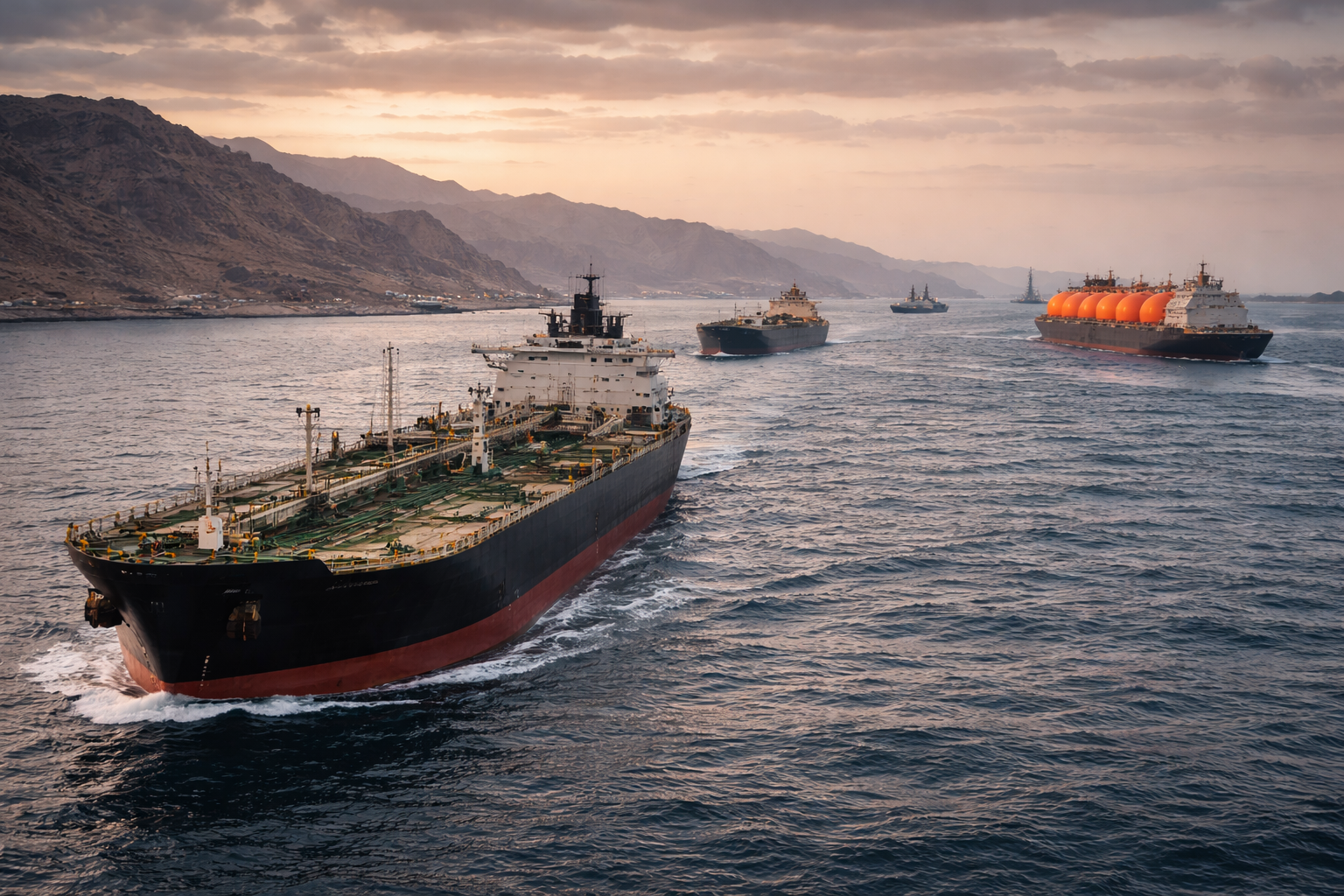
A 165-kilometre-long sea passage in the Persian Gulf is the centre of all attention on Monday.
Situated between the Persian Gulf and the Gulf of Oman, the Strait of Hormuz provides the only sea passage from the Persian Gulf to the open ocean and is one of the world’s most strategically important choke points.
About 15 million barrels per day of crude oil transit daily through the Strait of Hormuz, according to Rystad Energy’s calculations.
Experts believe that if this strait is fully blocked, oil prices could spike to $140 per barrel for the first time since early 2022.
On February 28, in the early morning, the US and Israel initiated direct and substantial military operations within Iran.
This current campaign appears to be greater in both scope and intensity than the preceding 12-day confrontation.
Iran has responded forcefully by targeting Israel, US bases in the region, and some civilian infrastructure within some neighbouring Gulf states.
It also responded to the attacks by restricting shipping traffic through the Strait of Hormuz.
Oil markets face significant upside
A prolonged military action and an aggressive counter from Iran could spell doom for oil trade through the Strait of Hormuz.
Unconfirmed reports have already surfaced regarding potential strikes on Iran’s Kharg Island, which is the primary terminal for nearly all of Iran’s oil exports.
The possible impact involves approximately 1.5 million barrels per day (bpd) of oil, most of which is destined for China.
This action would represent a significant escalation in terms of potential impact.
Of major significance is the reported announcement by Iran to close the Strait of Hormuz.
This critical choke point for global energy markets handles the transit of 20 million barrels of oil per day and over 100 billion cubic meters of LNG annually, which constitutes approximately 20% of the world’s LNG trade, according to ING Group.
“However, it would be difficult to enforce a closure and any attempts to do so would likely see a strong response from the US,” Warren Patterson, head of commodities strategy at ING Group, said in a note.
“In the event of a prolonged war, the Strait of Hormuz is likely to remain impassable for a longer period of time. The price of Brent crude oil could then rise towards $100 per barrel and remain at this level for some time,” Commerzbank AG’s chief economist, Jörg Krämer, said in a report.
The reluctance of vessels to navigate the strait due to the inherent risks is growing.
Should this hesitation continue, the oil and gas markets will face increasing consequences.
“Elevated global benchmark prices and steep backwardation are expected to be sustained until the Strait is again passable,” Jorge Leon, senior vice president and head of geopolitical analysis at Rystad Energy, said in an emailed commentary.
“Unless de-escalation signals emerge swiftly, we expect a significant upward repricing of oil at the start of the week.”
Options to bypass the Strait
Circumventing the Strait is challenging, as options are scarce, according to Rystad Energy.
Saudi Arabia possesses an alternative: rerouting oil through its East-West pipeline to the Red Sea, a route with an approximate capacity of 5 million bpd.
The UAE has access to the Abu Dhabi pipeline, which can transport approximately 1.5 million bpd.
However, even if these alternative routes are fully utilised, a substantial volume of exports—potentially between 8 and 10 million bpd—would still be vulnerable should the Strait become unusable.
“In other words, the ability to reroute flows would only partially mitigate the disruption,” Leon said.
The diversion of oil through the pipeline would restrict the supply shock to around 15 million bpd (9 million bpd for crude oil and 6 million bpd for refined products), according to ING.
Disruptions would not just be limited to crude oil prices; refined product cracks could also strengthen.
Approximately 6 million bpd of refined products flow through the strait, placing these flows at risk.
Moreover, interruptions to crude oil flows would negatively impact refinery operations globally, particularly in Asia, which is the destination for the majority of these energy shipments, Patterson said.
A blockade would face considerable pressure from other governments, especially in Asia, due to the continent’s heavy reliance on Persian Gulf energy supplies.
84% of oil and 83% of LNG passing through the Strait of Hormuz go to Asia, with China being the main destination.
SPR reserves and OPEC’s role
“If the market sees significant oil supply disruptions, the quickest action we are likely to see from governments is a coordinated release of oil from strategic petroleum reserves (SPR),” ING’s Patterson said.
The US SPR, depleted significantly after Russia’s 2022 invasion of Ukraine, is now about 35% smaller than in early 2021.
However, at roughly 415 million barrels, it still allows for further emergency releases to ease market pressure, though these releases only provide temporary relief.
OPEC+ decided to boost supply by 206,000 bpd for April, exceeding the anticipated 137,000 bpd increase, following their March 1 meeting.
This larger-than-expected increase from the group could potentially contribute to alleviating supply concerns.
Additionally, Saudi Arabia’s exports have recently surged to their highest level in three years, indicating that a supply adjustment was already in progress before any official decision was made.
“In absolute terms, 206,000 bpd is small relative to global demand of more than 100 million bpd – on its own, it does not materially change the balance,” Rystad Energy’s Leon added.
“The decision is therefore more about signaling than about volume.”
OPEC+ is currently adopting a cautious approach to deploying its spare capacity.
While the group is ready to utilise this buffer if necessary, it is unwilling to increase production aggressively at this time.
This careful management is crucial because effective spare capacity is limited to about 3.5 million bpd. Deploying this critical buffer too quickly would compromise the group’s ability to respond effectively to a more significant supply disruption in the future.
“Importantly, this increase is unlikely to calm markets in the immediate term,” Leon said.
All eyes remain glued to the events in the Middle East. The price of West Texas Intermediate crude last traded at $72 per barrel, up 7.4%, while Brent was 7.8% higher at $78.60 per barrel.
The post Why closing of the Strait of Hormuz can push Brent to $140 appeared first on Invezz
