
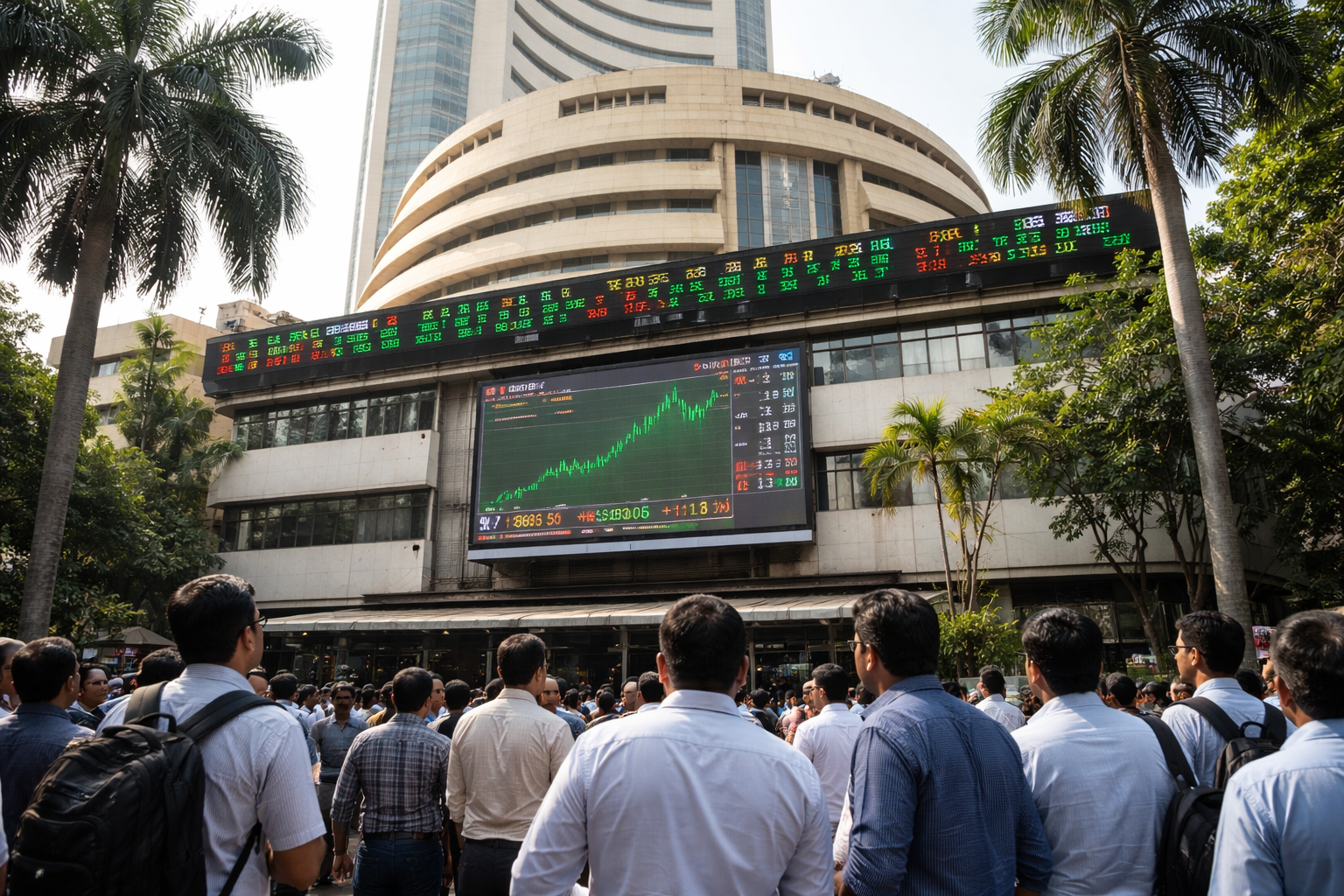
Indian stocks have suffered a major reversal as retail investors book profits and a risk-off sentiment spreads globally. The blue-chip Nifty 50 Index slumped to INR 24,350 on Wednesday, its lowest swing since August last year. It has retreated by 7.50% from its highest level this year.
Indian stocks plunge as geopolitical risks rise
Like other global stocks, Indian stocks have not been immune to the ongoing crisis in the Middle East that has led to higher crude oil and natural gas prices.
Brent, the global benchmark, has jumped to $84, and some analysts believe that it will jump to $100 if the war becomes prolonged.
Natural gas, which India imports, has also surged in the past few days, a trend that may continue in the foreseeable future.
Higher energy prices are risky for India because it will increase the cost of doing business, affecting corporate margins. Additionally, there is a likelihood that the country will see an uptick in inflation, forcing the Reserve Bank of India (RBI) to intervene by hiking interest rates.
These concerns also explains why other Indian assets have plunged. Government bond yields continued rising, while the Indian rupee has slumped to the lowest level on record.
Most Nifty 50 Index companies slumped on Wednesday, with those in the materials segment suffering the biggest drop as higher energy prices mean more production and transport costs.
Tata Steel stock dropped by 6.52% on Wednesday, while Larsen & Toubro, Tata Motors, JSW Steel, and UltraTech Cement dropped by over 3.4%. Other top laggards were companies like SBI Life Insurance, Shriram Finance, Apollo Hospitals, and Trent fell by over 3%.
On the other hand, only four companies were in the green. Bharti Airtel jumped by 2%, while Coal India, Infosys, and Tech Mahindra jumped by over 0.30%.
To be clear. Indian stocks are not the only ones in the red. The Nikkei 225 Index dropped by 1.88% on Wednesday, while the Shanghai Composite and the Hang Seng Index fell by over 2%.
Nifty 50 Index technical analysis
Indian stocks have pulled back in the past few months, moving from a high of INR 26,428, where it found a major barrier this year. It failed to cross that level in November last year, January, and February this year.
The index formed a triple-top pattern at that stage and a neckline at INR 24,550, its lowest level in February this year. This pattern is usually a risky one as it signals that bulls are unwilling to buy above it.
The Nifty 50 Index has now moved below the neckline at 24,550. It has moved below the 50-day Exponential Moving Average. Additionally, the Relative Strength Index (RSI) is nearing the oversold level.
The distance between the triple-top and the neckline is about 7%. Measuring the same distance from the neckline gives it a target of INR 22,850.
The post Nifty 50 Index: Here’s why Indian stocks are plummeting appeared first on Invezz
